
Estonia's Digital Frontier: A Comprehensive Guide to Internet, Mobile, and Public WiFi Connectivity
Navigate Estonia's advanced digital landscape. This guide covers internet speeds, mobile networks, public WiFi, data privacy, and cybersecurity tips for residents and visitors.
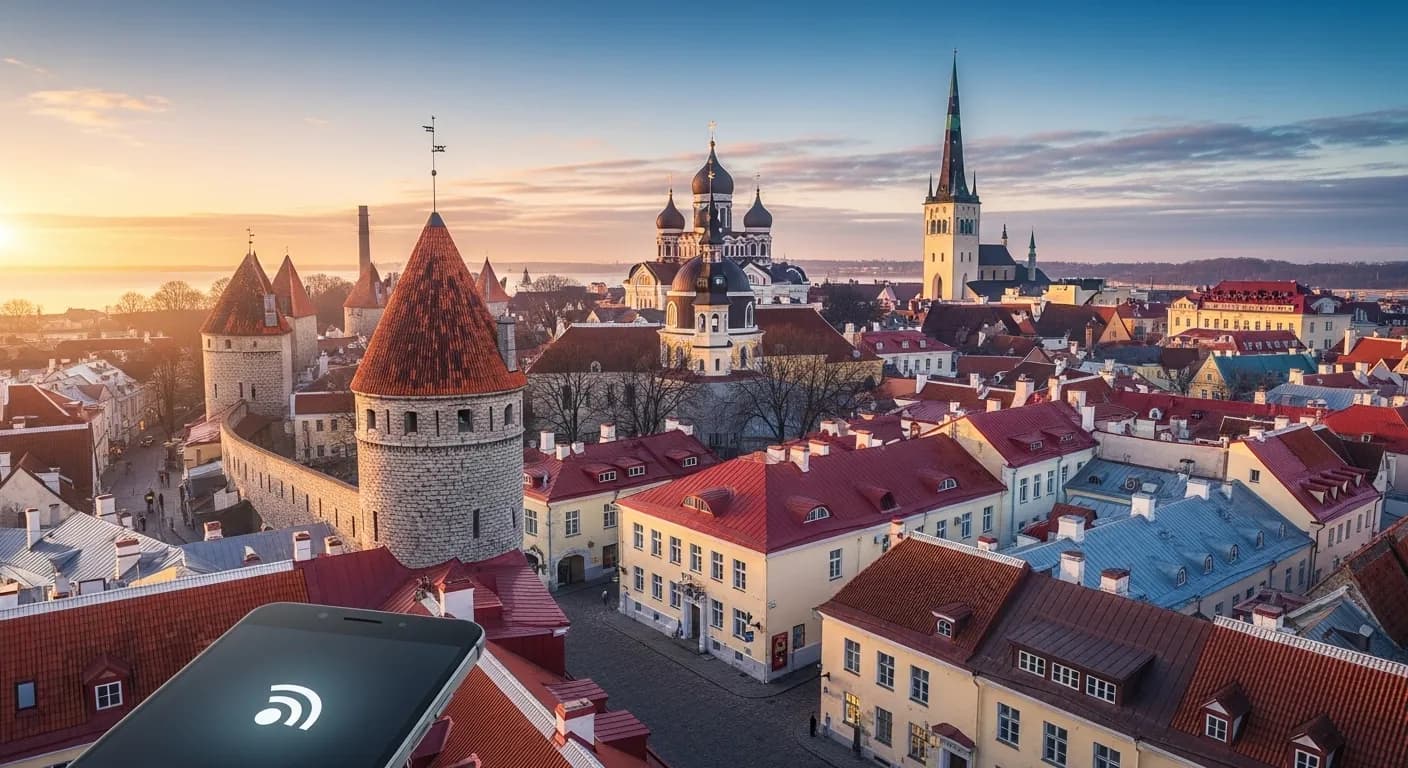
Travel & connectivity tips
Estonia's Hyper-Connected Landscape: Navigating Internet Speeds, Mobile Networks, and Public WiFi Welcome to Estonia, a global leader in digital innovation and connectivity. Renowned for its e-governance and high digital literacy, Estonia offers an exceptionally robust and widespread internet infrastructure. This section provides an in-depth look at internet speeds, major ISPs, 5G availability, and practical tips for seamless connectivity, whether you're a long-term resident or a short-term visitor. ## Internet Speeds: Among the World's Fastest Estonia consistently ranks among the top countries globally for internet speed and penetration. The backbone of this success is widespread fiber-optic infrastructure, particularly in urban areas. * Fixed Broadband: Average download speeds for fixed broadband connections frequently exceed 100 Mbps, with many urban households enjoying gigabit-level symmetrical speeds (up to 1 Gbps or more) through fiber-to-the-home (FTTH) deployments. Rural areas are also well-served, thanks to government initiatives and private investments aimed at bridging the digital divide, often achieving speeds competitive with many urban centers in other nations. * Mobile Broadband: Mobile network speeds are equally impressive, with average 4G LTE downloads often reaching 50-80 Mbps, and 5G pushing these figures significantly higher. ## Major Internet Service Providers (ISPs) The Estonian telecommunications market is competitive, dominated by a few key players offering a range of services from fixed-line broadband to mobile connectivity. 1. Telia Estonia: As part of the Telia Company, a major Nordic and Baltic operator, Telia Estonia is the largest telecom provider in the country. They offer extensive fiber optic networks, high-speed mobile internet (4G and 5G), TV, and various digital services. Telia's coverage is arguably the most comprehensive across Estonia. 2. Elisa Estonia: Another significant player, Elisa offers competitive mobile and fixed-line services. They have aggressively expanded their 5G network and offer a strong portfolio of mobile data plans, home internet solutions (fiber, cable, and wireless), and digital entertainment. 3. Tele2 Estonia: While primarily known for its mobile services, Tele2 also offers home internet solutions, often leveraging partner networks or wireless broadband. They are known for competitive pricing and focus heavily on mobile data packages. When choosing an ISP, consider your specific needs: * For Residents: Evaluate coverage in your specific location, available fiber infrastructure, contract terms, bundled services (TV, landline), and customer support. Checking local community forums or asking neighbors for recommendations can be helpful. * For Businesses: Look for dedicated business solutions, guaranteed uptimes (SLAs), static IP addresses, and robust support services. ## 5G Availability: Expanding Rapidly Estonia has been at the forefront of 5G deployment in the Baltics. Both Telia and Elisa have rolled out significant 5G networks, primarily concentrating in major urban centers like Tallinn, Tartu, Pärnu, and Narva, with ongoing expansion into smaller towns and transport corridors. * Coverage: While urban areas enjoy robust 5G, rural coverage is still developing. However, 4G LTE remains excellent and more than sufficient for most users across the country. * Devices: To leverage 5G, you'll need a 5G-compatible device and a data plan that includes 5G access. ## Practical Connectivity Tips for Travelers and Residents ### For Travelers: 1. Local SIM Cards: This is often the most cost-effective solution for staying connected. Prepaid SIM cards are readily available at Tallinn Airport, major shopping centers, telecom provider stores (Telia, Elisa, Tele2), and even some convenience stores. * Registration: In Estonia, prepaid SIM cards generally do not require extensive registration beyond basic personal details, though this can vary slightly. You'll need a valid ID (passport or EU ID card). * Data Packages: Look for packages offering generous data allowances, as these are typically inexpensive compared to roaming. 2. eSIM: All major Estonian operators (Telia, Elisa, Tele2) support eSIM, offering a convenient digital alternative to physical SIM cards. This is ideal for modern smartphones and allows for easy switching between plans without changing physical cards. Many international eSIM providers also offer plans for Estonia. 3. Roaming: While EU residents benefit from
Local connectivity laws
Estonia's Digital Governance: Data Protection, Privacy, and Online Freedom Estonia, as a pioneering digital nation and a member state of the European Union, operates under a robust framework of data protection, privacy regulations, and an unwavering commitment to online freedom. This section delves into the specific laws and principles governing digital interactions, emphasizing the protective measures in place for both individuals and businesses. ## Data Protection Laws: GDPR at the Core The cornerstone of data protection in Estonia, like all EU member states, is the General Data Protection Regulation (GDPR - Regulation (EU) 2016/679). Implemented across the EU in May 2018, GDPR sets a high standard for how personal data must be collected, stored, processed, and protected. ### Key Principles of GDPR in Estonia: * Lawfulness, Fairness, and Transparency: Data processing must be legal, fair, and transparent to the data subject. * Purpose Limitation: Data must be collected for specified, explicit, and legitimate purposes and not further processed in a manner incompatible with those purposes. * Data Minimisation: Only necessary data should be collected and processed. * Accuracy: Personal data must be accurate and kept up to date. * Storage Limitation: Data should be kept for no longer than is necessary for the purposes for which it is processed. * Integrity and Confidentiality: Data must be processed in a manner that ensures appropriate security of the personal data, including protection against unauthorised or unlawful processing and against accidental loss, destruction, or damage, using appropriate technical or organisational measures. * Accountability: Controllers are responsible for, and must be able to demonstrate compliance with, the above principles. ### Estonian Specifics: The Personal Data Protection Act While GDPR is directly applicable, Estonia has its own Personal Data Protection Act (Isikuandmete kaitse seadus) which supplements GDPR, particularly in areas where GDPR allows member states to introduce their own specific provisions. This Act clarifies certain aspects, such as: * Processing of personal data for journalistic purposes: Specific exemptions and considerations apply. * Processing of personal data in public administration: Detailed rules for government agencies and e-services. * The role and powers of the Data Protection Inspectorate. ## Privacy Regulations: The Role of the Andmekaitse Inspektsioon (AKI) The Estonian Data Protection Inspectorate (Andmekaitse Inspektsioon - AKI) is the independent supervisory authority responsible for overseeing the application of data protection laws in Estonia. Its responsibilities include: * Enforcement: Investigating complaints, conducting audits, and imposing fines for GDPR infringements. * Guidance: Providing advice to individuals and organisations on data protection matters. * Awareness: Promoting public awareness of data protection risks, rules, rights, and responsibilities. * International Cooperation: Collaborating with other EU data protection authorities. Individuals in Estonia have several key rights under GDPR and local law, including: * Right of access: To know what data is being processed about them. * Right to rectification: To correct inaccurate data. * Right to erasure ('right to be forgotten'): To request deletion of personal data under certain conditions. * Right to restriction of processing: To limit how organisations use their data. * Right to data portability: To receive their personal data in a structured, commonly used, and machine-readable format. * Right to object: To object to certain types of processing. ## Online Safety and Cybersecurity Framework Estonia places a high priority on online safety, integrating it into its broader cybersecurity strategy. * CERT-EE (Computer Emergency Response Team Estonia): Operated by the Information System Authority (RIA), CERT-EE is the national point of contact for cybersecurity incidents. It coordinates the handling of security incidents, provides advice on preventing cyber threats, and raises public awareness. * Child Online Safety: Various initiatives and educational programs are in place to promote safe internet use among children and young people, often involving collaboration between government, NGOs, and schools. Reporting mechanisms for child abuse material are also robust. * Cybercrime: Estonia has well-defined legal frameworks to combat cybercrime, including hacking, fraud, and identity theft. Law enforcement agencies are equipped to investigate and prosecute such offenses, often collaborating with international partners. ## Internet Freedom and Absence of Censorship Estonia is a staunch advocate for internet freedom and is widely recognized for its open and uncensored internet environment. * No Government Censorship: The Estonian government does not engage in filtering or blocking internet content based on political, social, or religious grounds. Freedom of speech and access to information are fundamental rights enshrined in the Estonian Constitution. * Limited Content Restrictions: The only restrictions on content typically relate to universally illegal material, such as child pornography, incitement to violence, or certain forms of hate speech, in accordance with international and EU legal standards. These restrictions are specific, legally defined, and subject to judicial oversight. * Net Neutrality: Estonia, as an EU member, adheres to the EU's net neutrality regulations. These regulations ensure that all internet traffic is treated equally, without discrimination, restriction, or interference, regardless of sender, receiver, type, content, device, service, or application. This prevents ISPs from blocking, slowing down, or charging more for access to certain content or services. ## Telecommunications Regulation: Tehnilise Järelevalve Amet (TJA) The Estonian Technical Regulatory Authority (Tehnilise Järelevalve Amet - TJA) plays a crucial role in overseeing the telecommunications sector. Its responsibilities include: * Spectrum Management: Allocating and managing radio frequencies, including those for mobile networks and broadcasting. * Market Regulation: Ensuring fair competition among telecom operators and protecting consumer interests. * Infrastructure Oversight: Monitoring the quality and reliability of communication networks. * Consumer Protection: Handling disputes between consumers and service providers, ensuring compliance with service quality standards. In summary, Estonia provides a highly secure and open digital environment, underpinned by strong EU-level and national data protection laws, an active supervisory authority in AKI, and a firm commitment to internet freedom. Businesses and individuals operating within or connecting from Estonia can generally expect a high degree of transparency, protection, and unrestricted access to online information, provided they adhere to the relevant legal frameworks. The digital ecosystem is designed to foster trust and innovation while safeguarding fundamental rights.
For venue operators
Public WiFi Provision in Estonia: Legal and Technical Obligations for Businesses Offering public WiFi is a common service provided by hotels, cafes, malls, and other venues across Estonia, reflecting the nation's digital-first ethos. However, providing this convenience comes with significant legal and technical obligations, particularly concerning data protection, user privacy, and network security. Businesses must navigate these responsibilities carefully to ensure compliance and a secure experience for their users. ## Legal Obligations for Public WiFi Providers Businesses providing public WiFi in Estonia, as within the EU, are primarily governed by the General Data Protection Regulation (GDPR) and the Estonian Personal Data Protection Act. Additionally, other relevant legislation such as the Information Society Services Act and general consumer protection laws apply. ### 1. Data Protection and Privacy (GDPR Compliance): * Lawful Basis for Processing Data: Any personal data collected from users (e.g., email address for login, device MAC address, browsing logs) must have a lawful basis. This is typically user consent (obtained explicitly through a captive portal) or legitimate interest (e.g., for network security, but this needs careful justification). * Transparency: Users must be informed about what data is being collected, why it's being collected, how long it will be stored, and with whom it might be shared. This information should be easily accessible, often through a clear privacy policy linked from the captive portal. * Data Minimisation: Only collect data that is strictly necessary for the purpose of providing the service or meeting legal obligations. Avoid collecting excessive personal information. * Data Security: Implement appropriate technical and organizational measures to protect collected data from unauthorized access, loss, or destruction. This includes encryption, access controls, and regular security audits. * Data Retention: Personal data should not be stored longer than necessary. Define clear data retention policies and adhere to them. * User Rights: Businesses must be prepared to honor users' GDPR rights, including the right to access their data, rectify it, or request its erasure. ### 2. Responsibility for User Actions and Content: Estonian law generally follows the EU's
For your guests
Cybersecurity for End-Users in Estonia: Navigating Open Hotspots, VPNs, and Spoofing Risks Estonia's advanced digital infrastructure offers unparalleled convenience, but a hyper-connected environment also presents unique cybersecurity challenges for end-users. While Estonia is a safe and digitally secure nation, individuals must remain vigilant, especially when using public networks. This section provides essential cybersecurity advice covering open hotspots, VPN usage, and spoofing risks, tailored for both residents and visitors. ## The Perils of Open Hotspots: Assume No Privacy Public Wi-Fi hotspots, ubiquitous in Estonian cafes, malls, airports, and public spaces, offer convenience but often lack robust security. Connecting to an open (unencrypted) or weakly encrypted (WPA/WPA2-PSK with a shared password) Wi-Fi network carries inherent risks. ### Key Dangers: 1. Eavesdropping/Sniffing: On an open network, anyone with basic tools can intercept data transmitted between your device and the internet. This means your emails, login credentials, banking information, and private communications could be exposed if they are not encrypted by the application or website you are using (e.g., an unencrypted HTTP connection). 2. Man-in-the-Middle (MITM) Attacks: Attackers can position themselves between your device and the internet, intercepting and even altering communications without your knowledge. They could redirect you to fake websites or inject malware. 3. Malware Distribution: Unscrupulous actors can set up malicious hotspots that appear legitimate, or compromise legitimate ones, to distribute malware to connected devices. 4. Session Hijacking: Attackers can steal session cookies, allowing them to impersonate you on websites or online services that you are logged into. ### Best Practices for Public Wi-Fi: * Prioritize HTTPS: Always ensure websites you visit use HTTPS (look for the padlock icon in the browser bar). This encrypts traffic between your browser and the website, even on an insecure Wi-Fi network. * Avoid Sensitive Transactions: Refrain from online banking, shopping with credit cards, accessing confidential work information, or logging into highly sensitive accounts (e.g., email, social media) on public Wi-Fi without a VPN. * Disable File Sharing: Turn off file sharing and network discovery features on your device to prevent unauthorized access to your files. * Keep Software Updated: Ensure your operating system, web browser, and all applications are updated to the latest versions to patch known security vulnerabilities. * Use Strong, Unique Passwords: Even if a session is hijacked, strong passwords limit further damage. ## VPN Usage: Your Shield in the Digital Wild A Virtual Private Network (VPN) is your most effective tool for securing your online activities, especially when using public Wi-Fi. ### How a VPN Helps: * Encryption: A VPN creates an encrypted tunnel between your device and a VPN server. All your internet traffic passes through this tunnel, making it unreadable to anyone trying to intercept it on a public network, including your ISP or the public Wi-Fi provider. * IP Masking: Your actual IP address is hidden, and your online activity appears to originate from the VPN server's location. This enhances privacy and can help bypass geo-restrictions. * Enhanced Security: Many VPNs include features like kill switches (to prevent data leaks if the VPN connection drops) and DNS leak protection. ### Legality and Recommendations in Estonia: * VPNs are fully legal in Estonia. There are no restrictions on their use for legitimate purposes. * Choose a Reputable Provider: Opt for well-known, audited VPN services with a strict no-logs policy. Free VPNs often come with hidden costs, such as data collection or slower speeds. * Always On: Consider keeping your VPN active whenever you are connected to any public Wi-Fi network, or even your home network if you prioritize maximum privacy. ## Spoofing Risks: Fake Hotspots and Phishing Beyond simply insecure networks, malicious actors can actively try to trick you into connecting to their rogue networks or divulging personal information. ### 1. Wi-Fi Spoofing (Evil Twin Attacks): * The Threat: Attackers create a fake Wi-Fi hotspot with a name identical or very similar to a legitimate one (e.g., "Tallinn Airport Free Wi-Fi" or "Cafe_X_Guest"). If you connect to the fake network, the attacker can intercept all your traffic and potentially install malware. * Prevention: * Verify Network Names: Always confirm the exact name of the official Wi-Fi network with staff if possible. * Avoid Auto-Connect: Configure your devices to "ask to join networks" rather than automatically connecting to known Wi-Fi networks. * Look for Encryption: Legitimate networks, even public ones, often use WPA2/WPA3 encryption, even if the password is publicly displayed. Be suspicious of completely open networks, especially if they are unexpected. * Use a VPN: A VPN adds a layer of encryption, making data interception difficult even on a spoofed network. ### 2. Phishing and Social Engineering: * The Threat: Attackers try to trick you into revealing sensitive information (passwords, credit card numbers) through deceptive emails, messages, or fake websites. This is not exclusive to public Wi-Fi but can be more prevalent when users are less vigilant. * Prevention: * Be Skeptical: Approach unsolicited emails or messages with caution, especially if they ask for personal information, contain urgent demands, or offer incredibly good deals. * Verify Senders: Always check the sender's email address and look for inconsistencies. * Inspect Links: Hover over links before clicking to see the actual URL. Be wary of shortened URLs or suspicious domains. * Strong Authentication: Use multi-factor authentication (MFA/2FA) for all important accounts. This adds a critical layer of security, making it harder for attackers to access your accounts even if they steal your password. ## General Cybersecurity Hygiene for All Users * Strong, Unique Passwords & Password Manager: Use complex, unique passwords for every online account. A reputable password manager is an invaluable tool for this. * Multi-Factor Authentication (MFA): Enable MFA on all accounts that offer it (email, banking, social media, cloud services). This typically involves a second verification step, like a code from an app or SMS, making it much harder for unauthorized access. * Software Updates: Regularly update your operating system, web browser, antivirus software, and all applications. Updates often include critical security patches. * Antivirus/Antimalware: Install and maintain reputable antivirus and antimalware software on your devices. * Backup Your Data: Regularly back up important data to a secure external drive or cloud service. * Be Mindful of Permissions: When installing apps, review the permissions they request. Avoid granting unnecessary access to your microphone, camera, location, or contacts. * Secure Your Home Network: Change the default password of your home Wi-Fi router, use WPA3 (if supported) or WPA2 encryption, and consider creating a separate guest network. By adopting these cybersecurity practices, individuals in Estonia can confidently leverage the nation's advanced digital infrastructure while safeguarding their privacy and personal information. Vigilance and proactive security measures are your best defense in the digital world.